



News
How to Reduce Broken Egg Rate in Caged Layer Farming: A Practical Guide for Poultry Producers
Source: TBBView: 95How to Reduce Broken Egg Rate in Caged Layer Farming: A Practical Guide for Poultry Producers
Broken eggs are among the most frustrating profit leaks in any commercial layer operation. When a perfectly good egg cracks before it reaches the grading room, the producer loses not just the sale but also the feed, labor, and resources that went into producing it. For farms using battery cage systems or H-type layer cages, egg breakage is a persistent operational headache — but one with clear, actionable solutions.
Industry data tells a sobering story. In a well-managed caged layer house, the normal broken egg rate typically falls between 2% and 5%. However, when you factor in losses during collection, processing, packing, and transportation, total egg loss can climb to 13–20% before the product ever reaches the consumer. That represents billions of dollars in annual waste across the global egg industry.
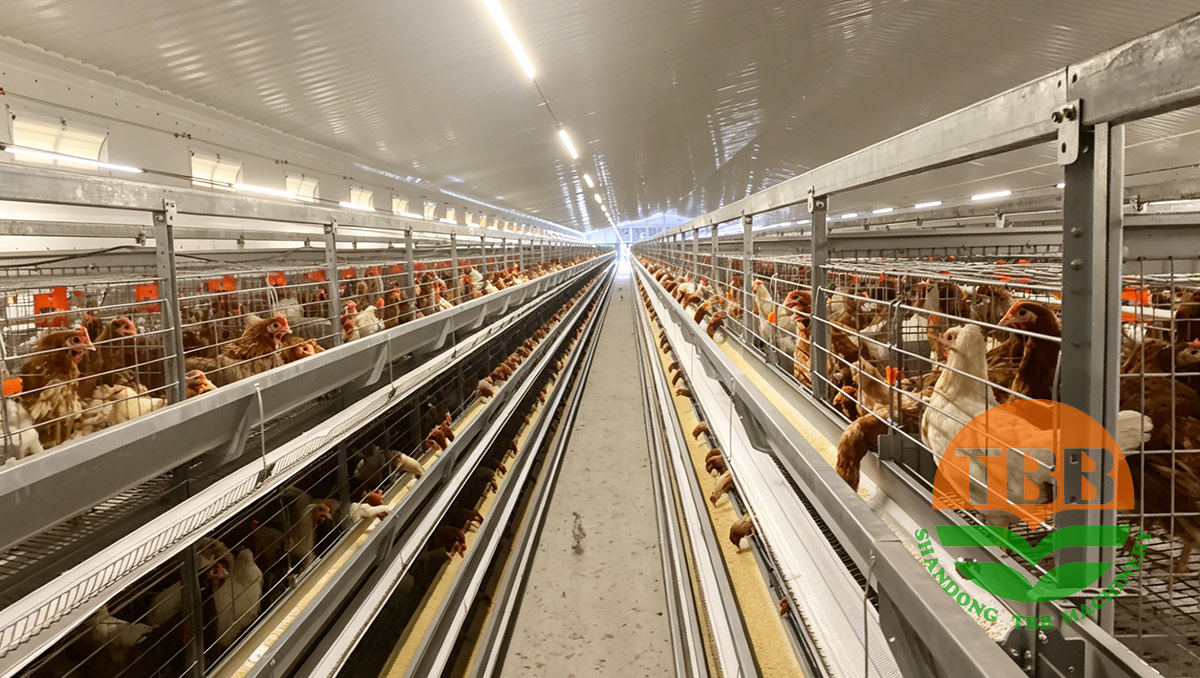
So what causes excessive egg breakage in caged environments, and — more importantly — what can farmers do about it?
Get the nutrition right first
Eggshell quality begins with what hens eat. Calcium is the obvious starting point — eggshells are roughly 94–97% calcium carbonate. For laying hens, dietary calcium should be maintained between 3.5% and 4.0%, with available phosphorus at 0.35–0.4%. A common mistake is relying entirely on fine limestone powder. Research suggests that feeding a portion of calcium as large-particle limestone or oyster shell — particularly in the afternoon, since shell calcification occurs overnight — improves shell strength significantly. The calcium-phosphorus ratio matters, too: a ratio around 4:1 is generally recommended.
Beyond calcium, vitamin D3 is essential for calcium absorption, while trace minerals like manganese and zinc contribute directly to eggshell toughness and matrix formation. Deficiencies in any of these nutrients will show up as higher crack rates.
Cage design and equipment matter more than most producers realize
Mechanical damage is a leading cause of broken eggs in caged layer operations. The slope of the cage floor is perhaps the single most important variable. Industry experts recommend a cage floor slope between 7 and 9 degrees. A slope that is too shallow traps eggs in the cage where hens can peck or step on them. A slope that is too steep sends eggs rolling too fast, causing impact cracks when they hit the egg collection belt. Some studies indicate that properly sloped cage floors (5–7°) can reduce egg breakage by 15–20% compared to flat surfaces.
Other equipment factors to watch: the gauge and condition of the cage floor wire (2.5–3.0 mm diameter is recommended, with no burrs or rust), the smoothness of collection belts, and the presence of cushioning materials at collection points. Even a small metal burr can become a persistent "egg breaker" over time.
Management practices that make a measurable difference
How often eggs are collected has a direct impact on breakage rates. Eggs that sit in the cage too long are vulnerable to pecking, trampling, and collision with freshly laid eggs. During peak laying hours — roughly 9:00 AM to 1:00 PM — collecting eggs 3–4 times per day can significantly reduce the time eggs spend exposed to risk.
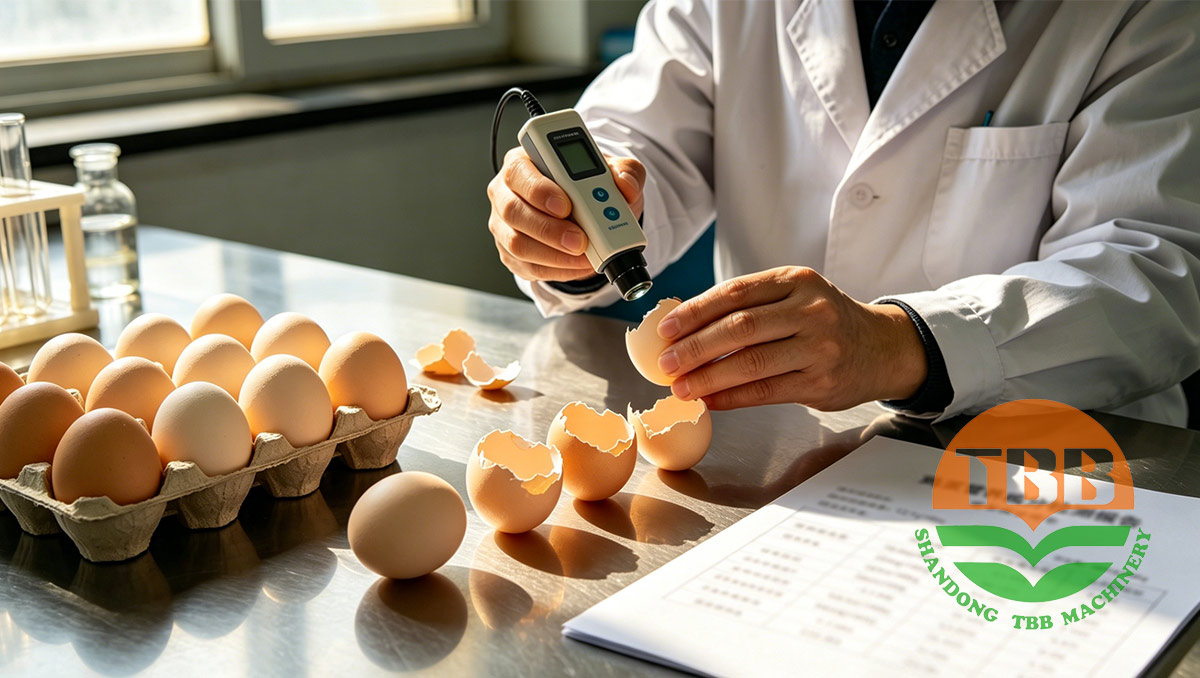
Stress is another silent culprit. Startle responses, sudden noise, temperature extremes, and changes in routine can disrupt a hen's endocrine system and calcium metabolism, leading to "stress-induced egg breakage" — thin shells, soft shells, and shell-less eggs. Maintaining stable environmental conditions is critical. House temperatures above 32°C are particularly damaging to shell quality.
Genetics also plays a role. Brown-egg breeds like Hy-Line Brown and Lohmann Brown generally produce eggs with better shell strength and toughness compared to white-egg varieties. Selecting breeds known for shell quality can give producers a built-in advantage from day one.
The bottom line
The economic case for reducing broken egg rates is compelling. With total egg losses from production to end user reaching double-digit percentages in many operations, even a 2–3 percentage point improvement in breakage rates can translate into tens of thousands of dollars in recovered revenue for a medium-to-large caged layer farm. The fixes — balanced layer feed formulation, proper cage floor slope adjustment, automated egg collection system maintenance, and stress reduction in laying hens — are neither complicated nor prohibitively expensive. They simply require attention to detail and a willingness to audit current practices against what the research says works.
If you are running a poultry farming operation and want to bring your broken egg percentage below that critical 2% threshold, I can help you identify the specific bottlenecks in your setup — whether it‘s calcium particle size in your feed, your cage system design, or your egg collection frequency and handling protocols. Contact me today and I’ll provide you with a personalized assessment along with this year‘s most competitive pricing for equipment upgrades and nutrition consulting — because every intact egg is a dollar that stays in your pocket.