



News
Poultry Ventilation System Design for Hot Climate Regions: Key Considerations and Best Practices
Source: TBBView: 66Poultry Ventilation System Design for Hot Climate Regions: Key Considerations and Best Practices
If you run a commercial poultry operation in Africa, the Middle East, or Southeast Asia, you already know what heat does to a flock. When outdoor temperatures push past 35°C and humidity sits above 70%, birds stop eating, start panting, and your production cycle starts losing money fast. Getting the poultry house ventilation for hot climates right isn't optional anymore — it's the foundation of a profitable operation.
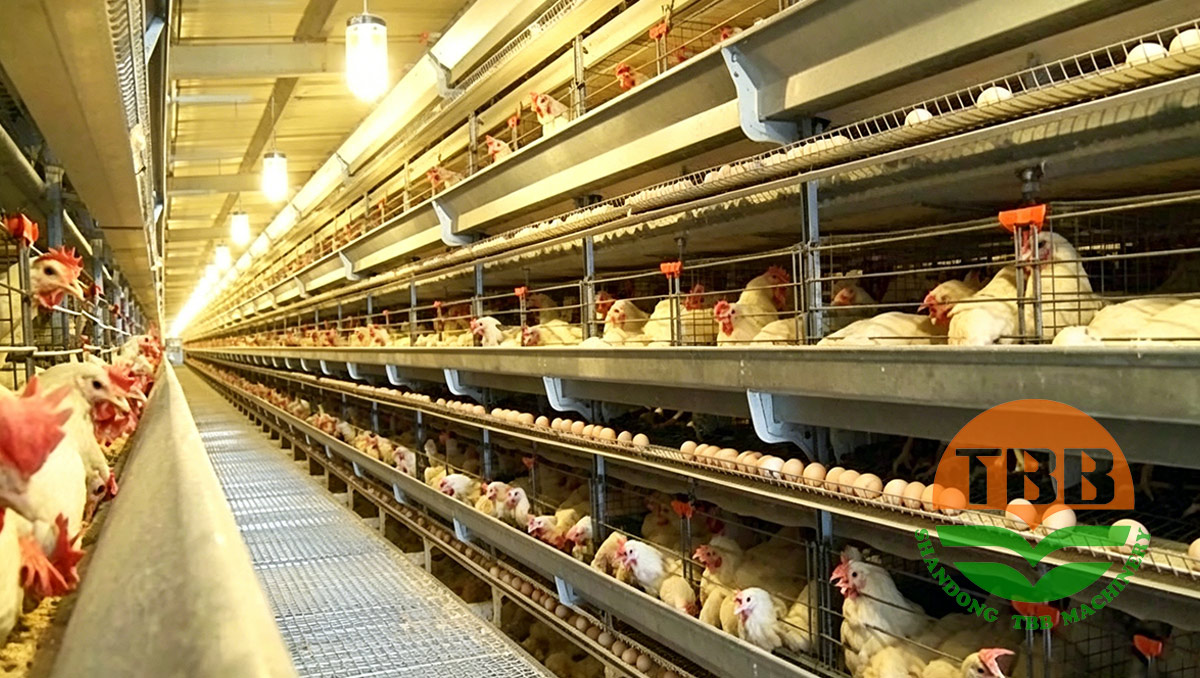
Most serious producers in these regions have figured out that basic sidewall fans don't cut it once things really heat up. The conversation has shifted — and rightfully so — to tunnel ventilation system design for broiler houses. That's where the real gains are.
▶ How Tunnel Ventilation Actually Works — Wind Chill Effect & Real Data
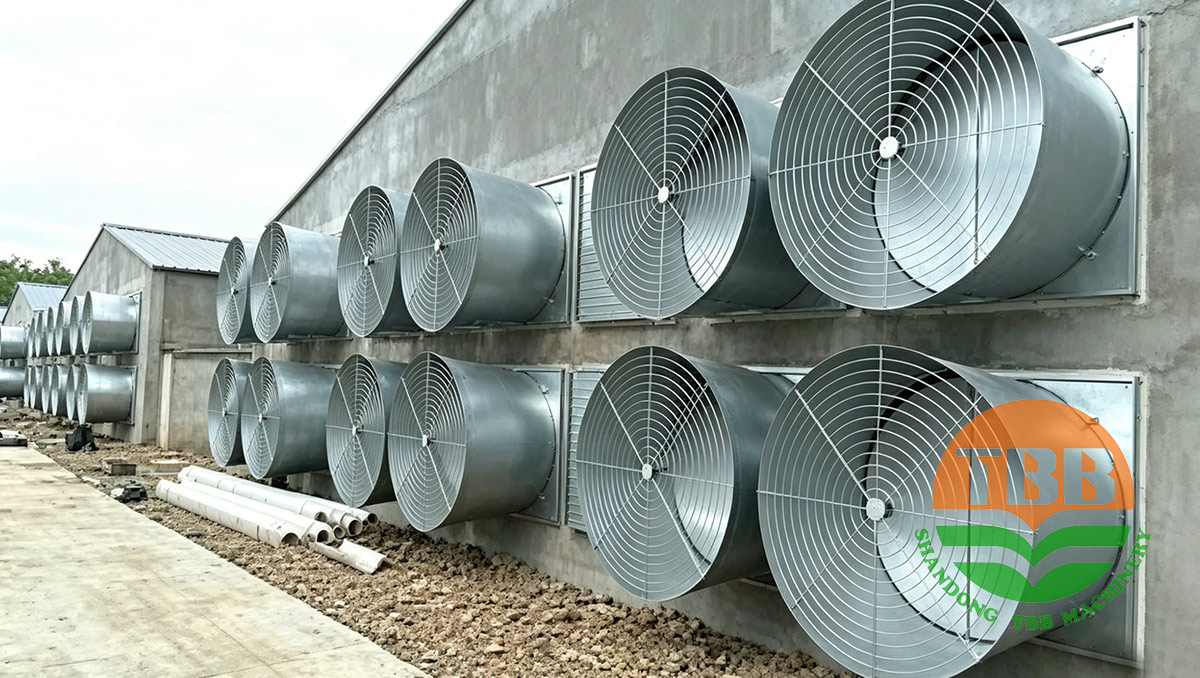
A properly configured tunnel system pulls air straight through the house from one end wall to the other. All the intake is at one end; all the exhaust fans are at the other. The idea is to get air moving at 2.0 to 3.0 m/s at bird level — fast enough to create a wind chill effect that actually lowers the effective temperature the birds feel.
The numbers are worth paying attention to. Research from the USDA Poultry Research Unit at Mississippi State showed that 7-week-old broilers exposed to 2 m/s airspeed experienced a wind chill benefit equivalent to nearly 4°C. Those birds finished heavier at market — about half a kilogram heavier on average — compared to birds raised in still air. In a commercial setting, that difference covers your feed cost for the entire flock.
The catches are important. When outside air temperature gets close to a bird's core body temperature — around 41°C — simply pushing hot air faster starts giving you diminishing returns. That's when you need more than airflow. You need actual cooling.
▶ Evaporative Cooling: What It Does and Where It Falls Short
An evaporative cooling pad for chicken coop system works by pulling incoming air through saturated cellulose or plastic media. The evaporation process can slash incoming air temperature by 20°F — roughly 11°C — under the right conditions. Combined with tunnel airflow, this is enough to bring a potentially lethal outdoor environment back into survivable territory.
But undersizing is a trap we see over and over. Cooling pad sizing has to match your total fan capacity — not just the square footage of your house. Shrink the pad area by 25%, and your cooling output drops by about 20%, your airflow falls off by over 10%, and the temperature gradient from pad end to fan end gets wider by up to 20%. For anyone engineering a commercial poultry cooling system for a tropical farm, these numbers aren't academic — they're the difference between a system that works and one that looks good on paper.
There's another issue that gets glossed over: humidity. Evaporative cooling adds moisture to the air. In humid coastal regions — much of West Africa, the Gulf, coastal Southeast Asia — that humidity penalty can undercut the cooling benefit. The pads are still useful, but you can't rely on them as your only line of defense.
▶ Alternative Approaches Worth Knowing About
In places where heat and humidity are both stubborn problems year-round, producers are increasingly looking at indirect evaporative and desiccant-based cooling systems. These can deliver meaningful temperature reduction without adding moisture to the supply air — a genuine advantage in humid climate poultry housing applications.
The CombiTunnel concept is worth considering too, especially in regions with real seasonal variation. It lets you run sidewall ventilation during milder months and switch to full tunnel mode when summer peaks. If you're in a place like northern India, Morocco, or southern Egypt where spring and fall are actually comfortable, you don't need peak cooling 365 days a year. A hybrid setup like this can save you on upfront equipment cost without sacrificing performance when it matters.
For farms running older open-sided houses — and there are a lot of them across sub-Saharan Africa and South Asia — a retrofit with negative pressure fans, automated curtain controllers, and circulation fans can close a lot of the gap. You don't always need to tear down and rebuild. A thoughtful upgrade to your existing structure often gets you 80% of the benefit at 30% of the cost.
▶ Why Your Fans Matter More Than You Think
Fan performance is one of those areas where brochures lie. A fan that looks impressive on paper can underperform in the field by a wide margin. Always spec your livestock ventilation fans against independently verified airflow data — ideally BESS-tested figures from the University of Illinois. The difference between a rated CFM and a real-world CFM can cost you thousands of cubic feet per minute of missing airflow in a large house.
Static pressure is the other half of the equation. A well-sealed tunnel house should hold at least 0.15 inches of static pressure with all inlets closed. When inlets open during minimum ventilation cycles, targeting 0.08 to 0.12 inches of static pressure keeps air mixing properly and avoids dead zones where birds cluster and suffer.
▶ Putting It All Together — Get Your Free Consultation
Designing a poultry farm ventilation design package for a hot climate isn't a one-size decision. It requires matching your tunnel fan configuration, evaporative cooling pad area, inlet design, and control system to your specific climate, your housing type, and your production targets. Done right, the investment pays back fast — through heavier birds at market, lower mortality, improved feed conversion, and fewer veterinary bills.
We're ready to walk you through the specifics of your operation. Whether you're building new enclosed broiler housing in a desert climate, upgrading layer facilities in the humid tropics, or just trying to get through the next summer without the usual losses, reach out. We supply complete poultry ventilation system packages — tunnel fans, cooling pads, inlet controls, and circulation units — for commercial operations across Africa, the Middle East, and Southeast Asia.
Contact us now for a free consultation. We'll give you a real quote based on your actual conditions — and right now, inquiries received this month qualify for our best pricing of the year. Don't wait until summer heat is already stressing your flock.