



News
Automatic Feeding vs Manual Feeding: ROI Comparison
Source: TBBView: 62Automatic Feeding vs Manual Feeding: ROI Comparison
Every poultry farmer faces the same question at some point: is it really worth upgrading from manual feeding to an automatic poultry feeding system? On the surface, the upfront investment can look intimidating. But when you sit down and run the actual numbers, the picture changes fast.
This article breaks down the real costs, the hidden savings, and the practical return on investment that layer cage farmers and broiler producers have seen after switching to fully automated feeding lines. Whether you are running 20,000 birds or scaling toward 200,000, the math tends to point in the same direction.
The Real Cost of Manual Feeding
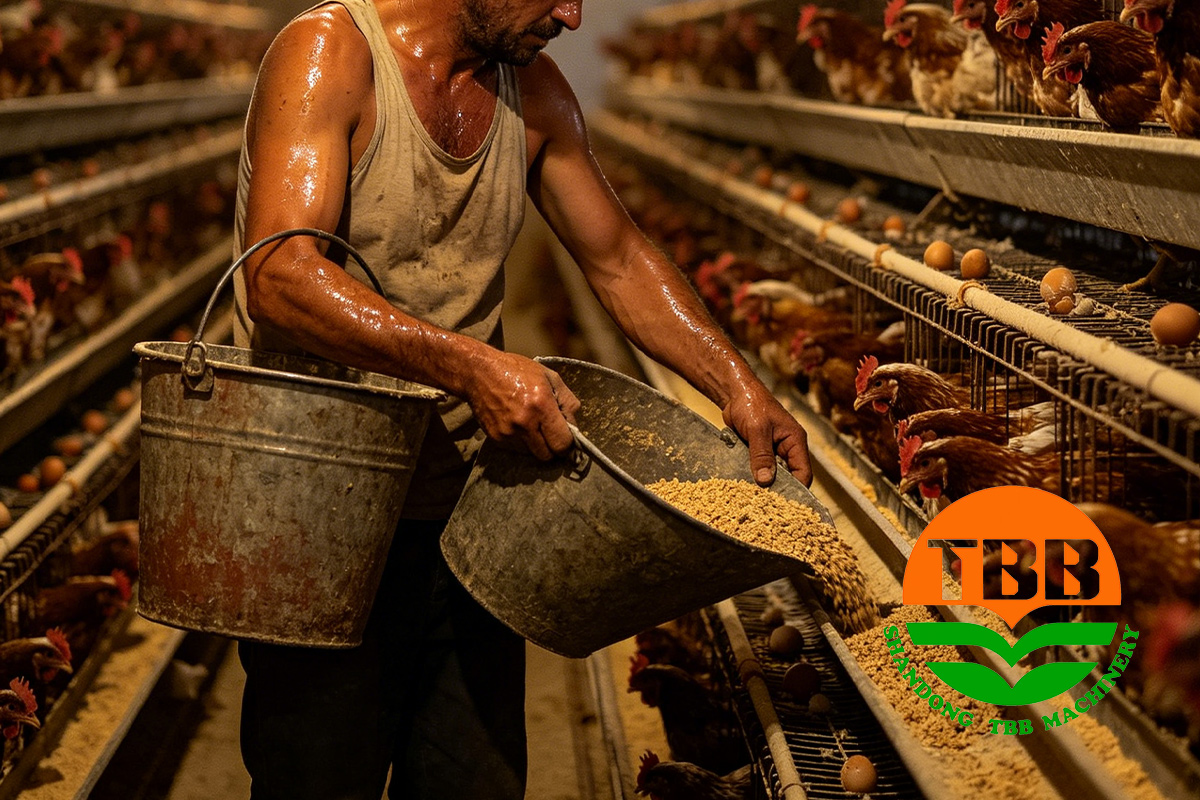
Manual feeding in a large-scale poultry house is not just slow - it is expensive in ways that rarely show up on a single invoice. Consider the following direct costs:
Labor wages: Depending on your region, feeding and watering a flock of 50,000 laying hens manually can require 6 to 10 full-time workers. In Southeast Asia and Central Asia, monthly wages per worker range from USD 250 to USD 600, translating to USD 1,500 to USD 6,000 in monthly payroll for feeding tasks alone.
Feed waste: Scooping and pouring feed by hand leads to spillage rates of 3% to 8%, depending on worker experience and cage tier height. At current feed prices, that waste adds up to thousands of dollars annually on a mid-sized farm.
Uneven feed distribution: Birds in cages farther from the feed inlet receive less feed or receive it later. This inconsistency directly affects flock uniformity, egg production rates, and feed conversion ratio (FCR) - three metrics that poultry producers live and die by.
Beyond wages and feed loss, manual labor introduces biosecurity risks. Each time a worker walks the aisles, there is potential for disease transmission between cage rows - something that an enclosed automated feeding line eliminates almost entirely.
What Automatic Feeding Actually Delivers
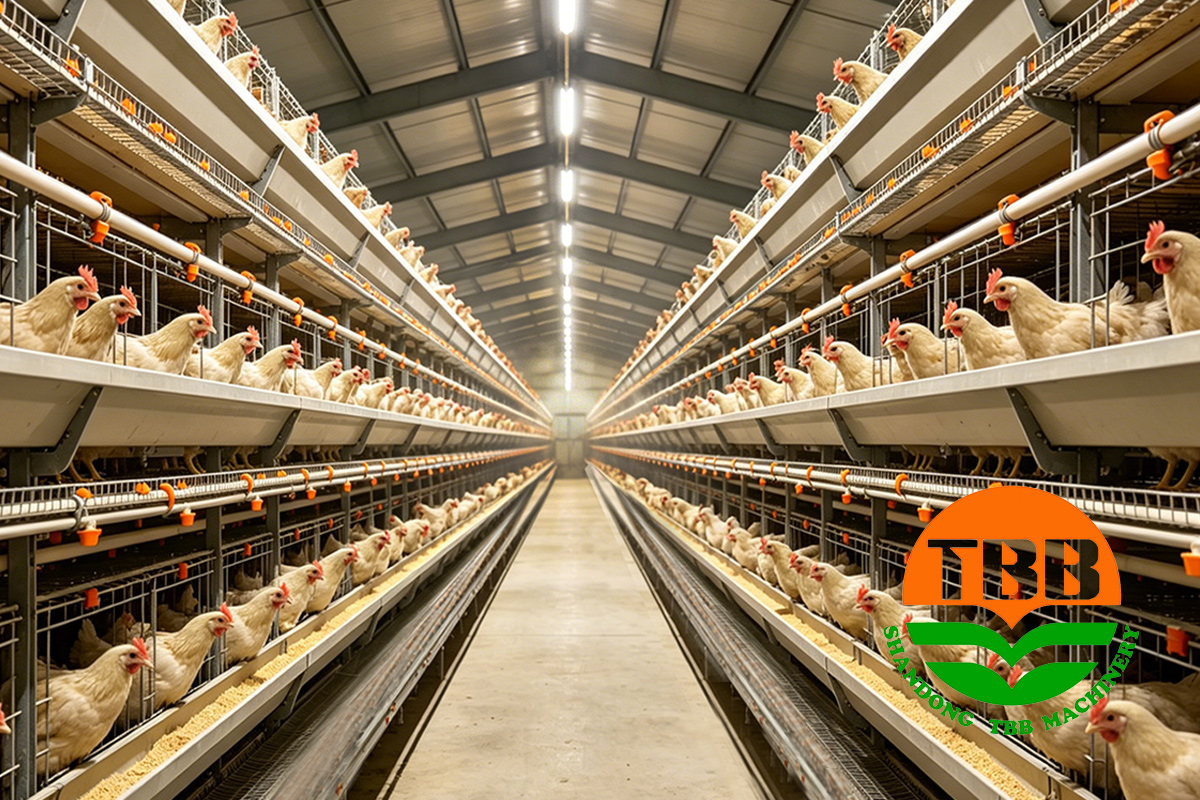
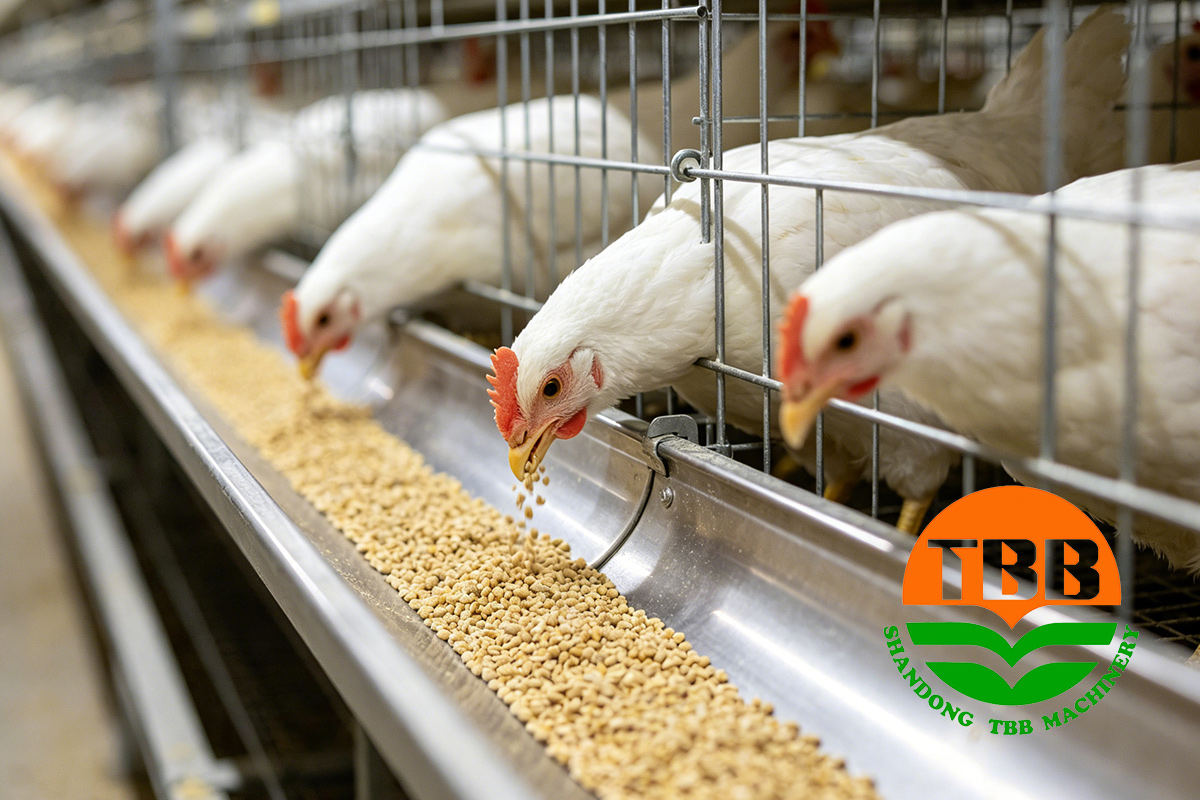
A properly installed automatic poultry feeding system - typically consisting of a feed hopper, main conveyor, and individual trough lines across each cage tier - changes the economics of feeding in several concrete ways:
Manual feeding workforce: 8 workers at USD 350/month = USD 2,800/month
Feed waste under manual system: ~4% of USD 50,000 monthly feed cost = USD 2,000/month
Total monthly losses attributable to manual feeding: approximately USD 4,800
After switching to an automatic feeding line for layer cages:
Labor reduced to 2 workers: USD 700/month
Feed waste under 1%: USD 500/month
Net monthly saving: approximately USD 3,600
With a complete automated feeding system for an 80,000-bird layer house typically priced between USD 60,000 and USD 90,000 (depending on configuration, cage tiers, and row count), the payback period lands between 17 and 25 months. Factor in the egg production improvements from better flock uniformity, and that timeline often shortens further.
Long-Term Value Beyond the Payback Period
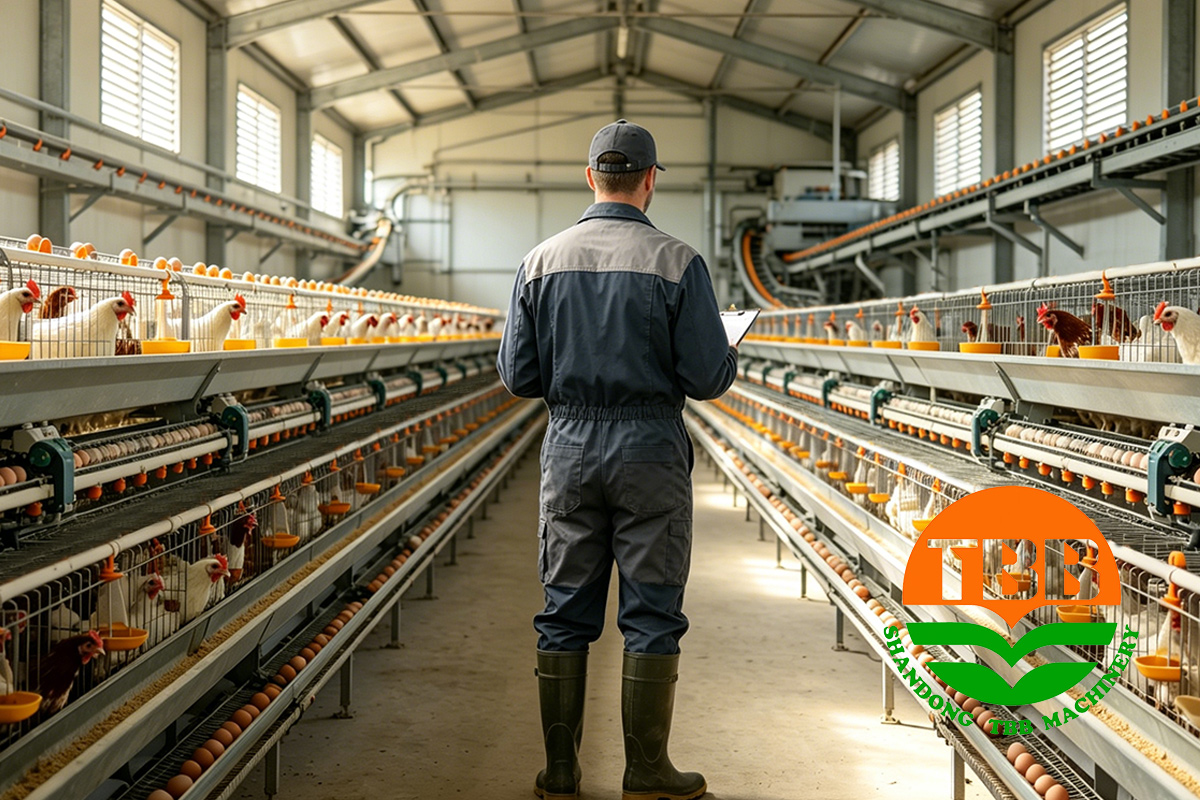
The ROI calculation above only captures the most visible savings. The longer-term value of an integrated automated poultry farm system runs deeper:
Scalability: Once automated feeding infrastructure is in place, adding birds - whether by extending cage rows or adding a second house - requires proportionally less additional labor. The per-bird management cost drops as scale increases.
Data integration: Modern poultry house automation systems can be connected to feed consumption monitors and environmental controllers, giving farm managers real-time visibility into feed intake per row - an input that directly informs flock health assessments.
Equipment durability: High-quality feeding lines built with hot-dip galvanized components resist corrosion in the humid, ammonia-rich environment of a poultry house. When equipment is rated for 20+ years of operation, the effective annual cost of the system drops significantly.
Farms that made the transition 5 or more years ago consistently report that their automated systems have essentially paid for themselves multiple times over - not just through direct savings, but through improved flock performance, more predictable production cycles, and reduced dependency on a fluctuating rural labor market.
Choosing the Right System for Your Farm
Not all automatic feeding systems deliver the same results. Key factors to evaluate include:
Feed delivery uniformity across all tiers - especially critical for 3-tier and 4-tier layer cage systems where gravitational feed distribution can vary.
Compatibility with your existing poultry cage equipment or planned new installation.
Ease of maintenance and availability of spare parts in your country.
Supplier track record - whether they manufacture the system themselves, have an operating farm to validate performance, and offer post-sale technical support.
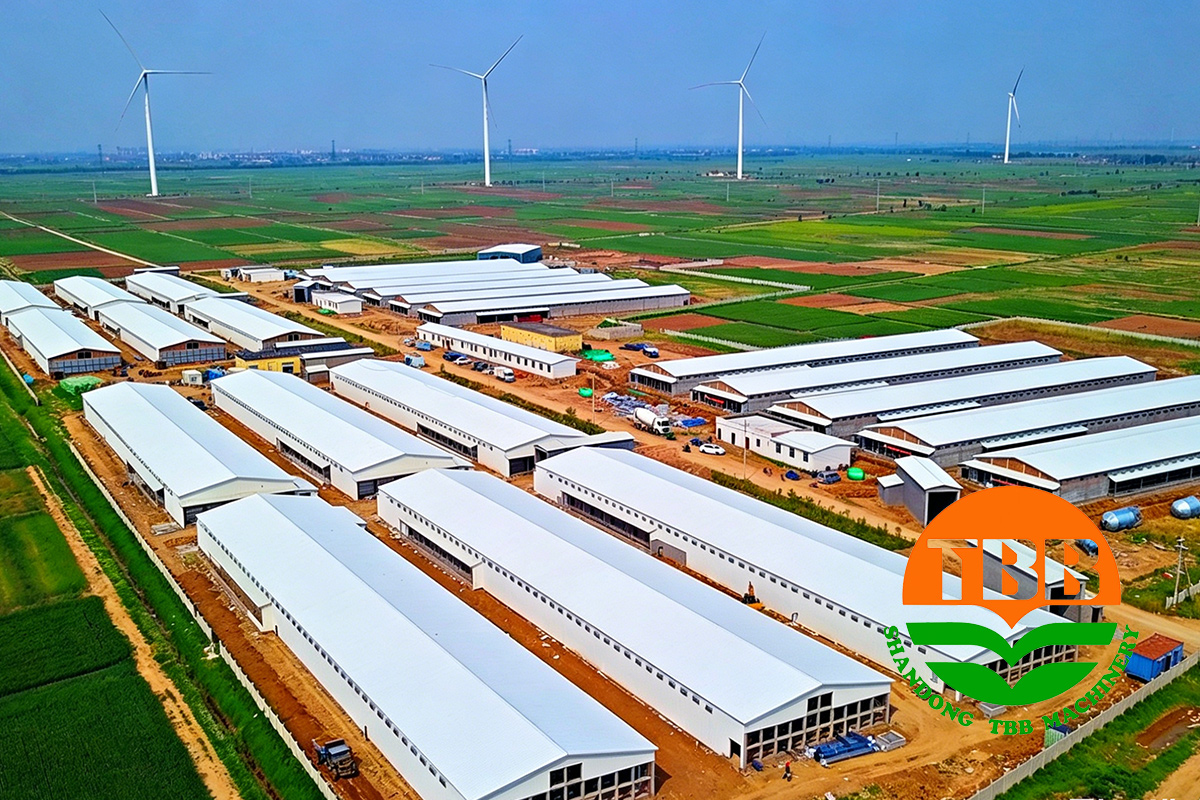
At Shandong Tobetter Machinery, our automatic feeding systems have been tested and refined in our own operating farm before any unit leaves the factory. With 62 registered technical patents and equipment exported to 12 countries, we design for real-world poultry house conditions - not just specification sheets.
Ready to Run the Numbers for Your Farm?
The ROI on automatic poultry feeding equipment is not a theoretical exercise - it is something hundreds of our clients have experienced firsthand. If you contact us now, our team will put together a customized ROI estimate based on your actual flock size, local labor costs, and current feed prices.
And there is one more reason to reach out today: we are currently offering our best pricing of the year for new orders placed in 2025. Customers who inquire now can lock in this year's most competitive price before availability closes.
Visit us at www.tobetterm.com or send your inquiry directly. Let us help you make the switch that pays for itself.