



News
Key Management Points for Chicks in Automatic Poultry Cage System
Source: TBBView: 146Key Management Points for Chicks in Automatic Poultry Cage System
Proper initial management of chicks after entering the automatic poultry cage is crucial for their healthy growth, which directly affects the breeding efficiency and economic benefits of commercial poultry farms. As a professional poultry farming automatic cage equipment supplier, we summarize the core management points for the first day of chicks entering the automated cage system, helping global farmers achieve scientific and efficient breeding.
I. Temperature Management
After the chickens enter the commercial poultry farm automatic cage system, the temperature should be raised promptly based on their behavior. The first thing chickens do after entering the automatic cage is drink water, and after drinking, some often huddle together. A reliable automatic poultry cage supplier will remind farmers that this is a typical sign of insufficient temperature, so it is necessary to adjust the temperature promptly to allow the chickens to gradually adapt.
Remember, if the chickens huddle tightly together, it means our temperature (or the chickens' perceived temperature; sometimes, insufficient humidity causes the perceived temperature to be too low) is still insufficient. Continue to increase the temperature (or humidity) until the chicks are loosely huddled together (not as loosely packed as adult chickens), which indicates the temperature is suitable. This detail is particularly important for the fully automatic feeding and drinking chicken cage system, as appropriate temperature can ensure chicks drink and eat normally, laying a foundation for subsequent growth.
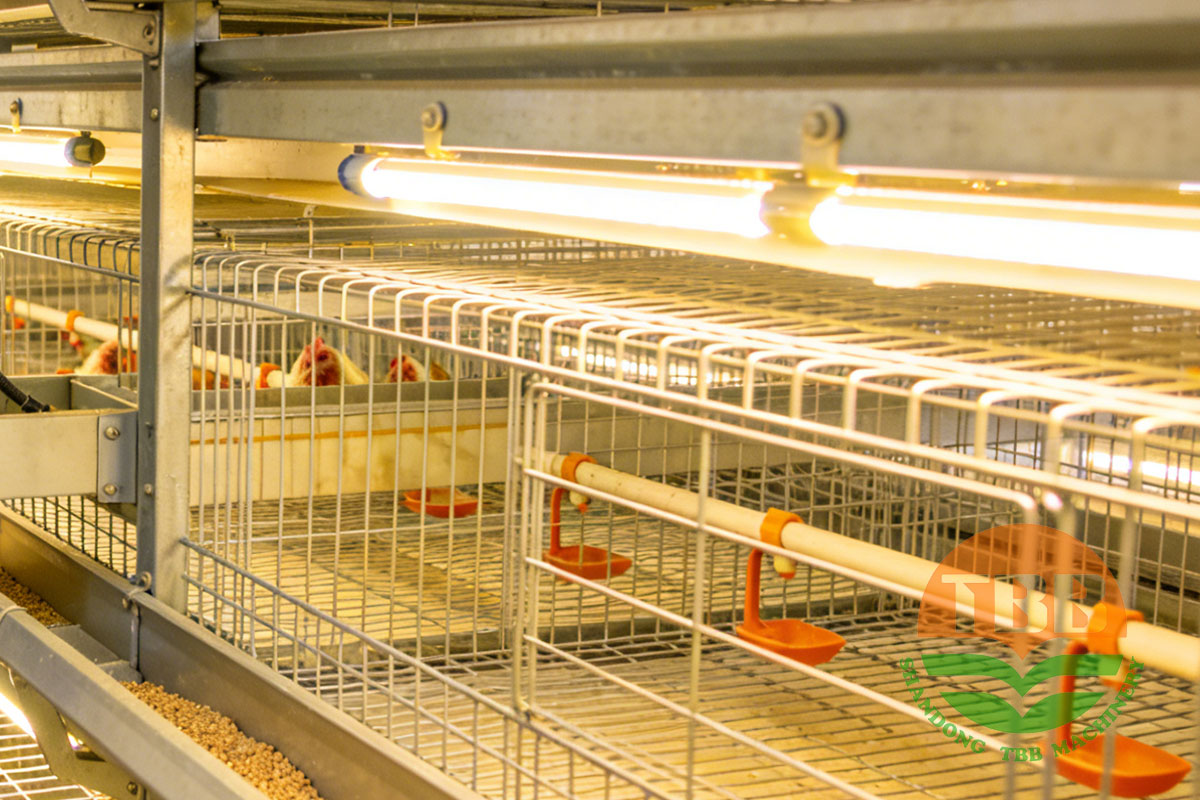
If the temperature on the first day is insufficient, the chickens will feel cold, resulting in reduced appetite, less drinking, and inactivity. This will directly affect their 24-hour satiety rate, and consequently affect the uniformity of the chicks and their 7-day weight—key indicators of breeding success in automated poultry farming.
II. Waterline Management
The waterline is a core component of the fully automatic feeding and drinking chicken cage system, so its height and functionality must be strictly adjusted. Adjust the waterline so that the bottom of the water cup is 1 to 1.5 fingers above the ground. At this height, the angle between the chick's neck and the waterline is approximately 45 degrees, which perfectly meets the chick's drinking needs and avoids difficulty in drinking or water waste.
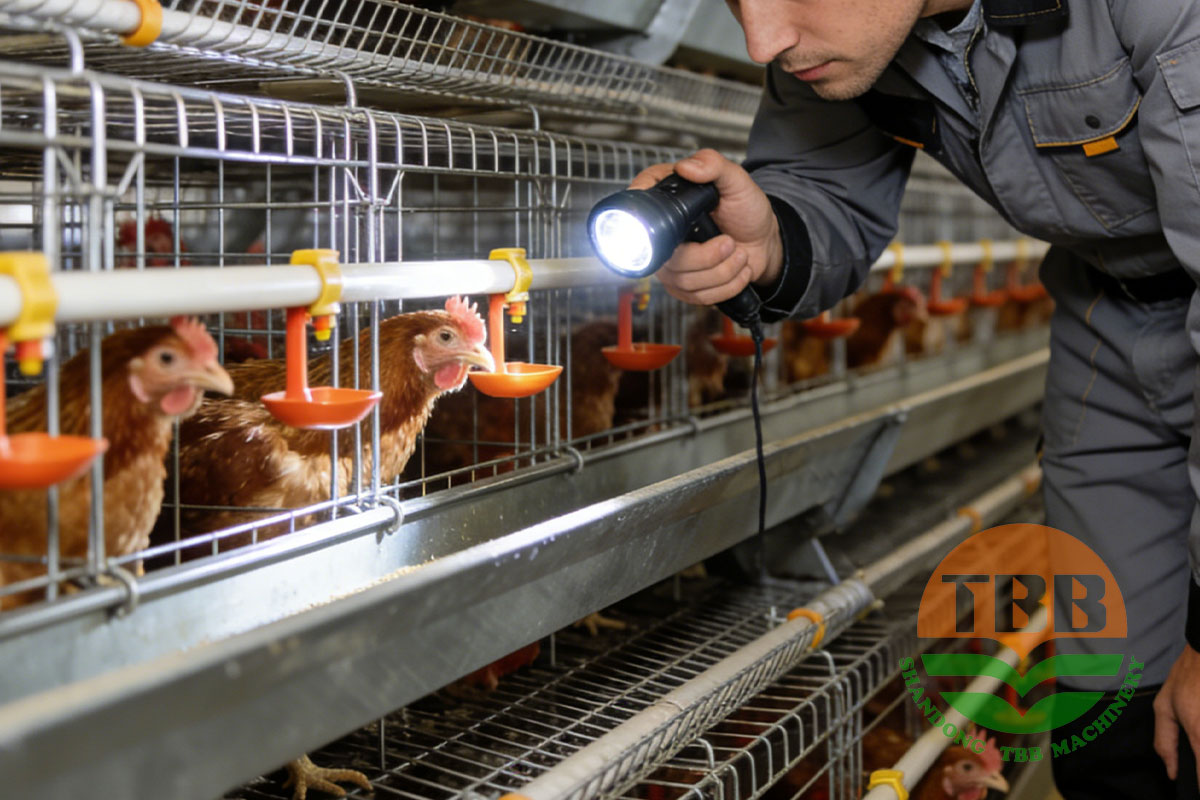
After the chicks start drinking, use a flashlight to carefully check the water flow from each nipple: if there are water droplets in the water cup, the nipple is functioning normally; if the water cup is dry, there is a problem with the nipple (such as blockage or poor water pressure). It should be noted that in net-house and ground-house rearing, chicks can switch to other nipples or waterlines if one is blocked, but in cage rearing with commercial poultry farm automatic cage system, if any nipple in the cage is blocked, it will directly cause dehydration for the chicks in that cage, affecting their survival rate. In addition, while checking the waterline, it is also recommended to inspect the operation of the automated manure removal poultry cage system to keep the cage environment clean and avoid bacterial growth affecting chick health.
III. Feeding Management
For chicks just entering the automatic poultry cage, reasonable feeding management is essential to improve their satiety rate. Small feed buckets can be used to assist with initial feeding, or feed troughs can be used directly—you can consult your poultry farming automatic cage equipment supplier for suggestions based on your cage type. When using small feed buckets, they should be removed after about 3 days to transition to feed troughs. Prolonged use will not only increase labor intensity but also cause the chicks to become dependent on the feed buckets, affecting feeding efficiency in the long run.
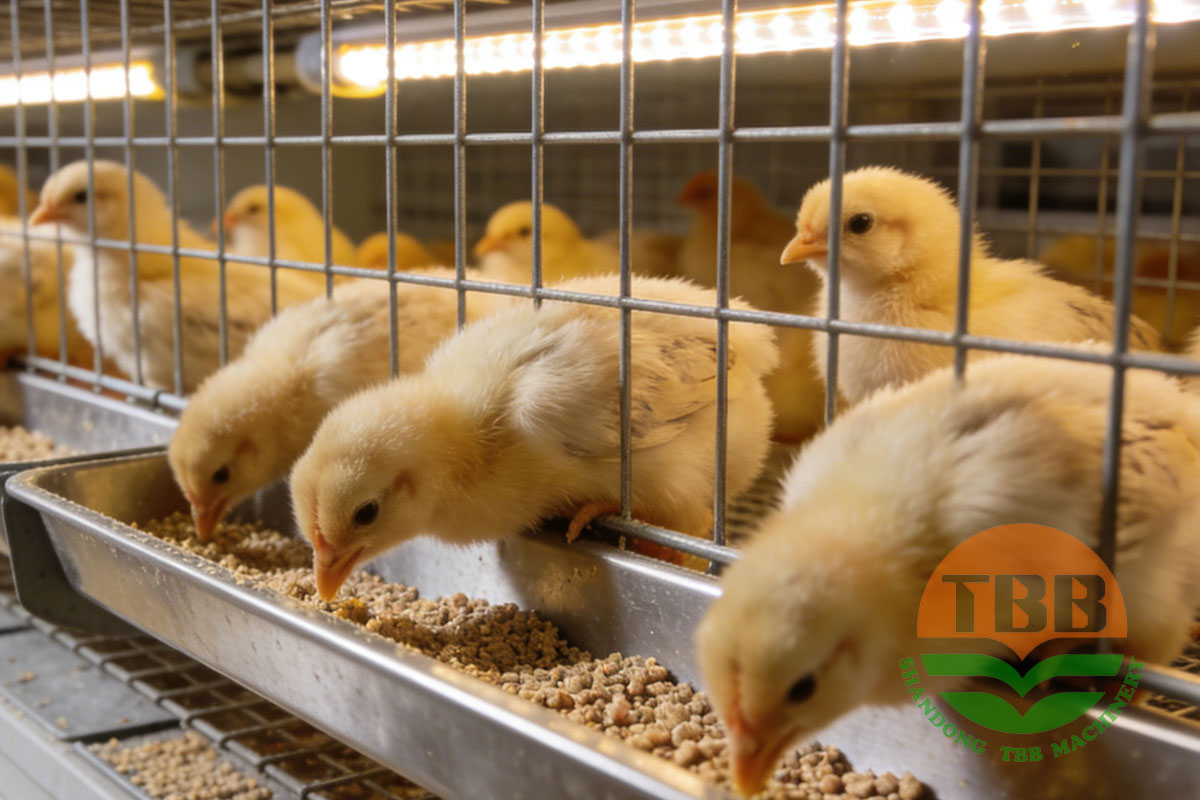
When introducing feed to chicks via troughs, the initial feed layer can be slightly thicker to encourage them to peek out and feed, reducing the difficulty of feeding. If you are concerned about the chicks being too weak to find feed, it is recommended to use a feed bucket to assist with initial feeding, which can effectively improve the 24-hour satiety rate.
Regularly check the feed level in the feed bucket (trough) to ensure it is within the appropriate range. Abnormal feed levels (too much remaining or too fast consumption) usually indicate potential problems, such as issues with the water line, inappropriate temperature, or equipment malfunctions. The 24-hour satiety rate of chicks should be above 99%, meaning that almost all chicks have received sufficient water and feed—this is a key standard to measure the effectiveness of initial management in the automated poultry cage system.
In addition, any chicks that escape from the cage should be promptly brought back inside to prevent dehydration, hunger, or injury, which is an easily overlooked detail in the daily management of the commercial poultry farm automatic cage system.
Stay tuned for our next article, which will focus on the key management points of chicks from 2 to 7 days old. We will share more practical skills to help you further improve the survival rate, uniformity, and 7-day weight of chicks, maximizing the benefits of automated poultry breeding.
For more information on advanced poultry farming automatic cage equipment, including commercial poultry farm automatic cage systems and fully automatic feeding and drinking chicken cage systems, feel free to reach out to us.
As a reliable automatic poultry cage supplier, Shandong Tobetter Machinery is committed to providing integrated farming solutions that enhance efficiency and bird welfare. Contact us to learn how our automated manure removal poultry cage system can optimize your operation.